
Countdown to Superyacht Investor London: Key Finance Questions Crew Should Be Asking

The City of London is the maritime finance capital of the world
Image by Rainhard Wiesinger from Pixabay
Superyacht Investor London is coming up March 3-4. It’s where bankers, brokers, builders and buyers (or, at least, their representatives) pitch up annually to network and find out about the latest trends in buying habits and finance deals. But what does a high finance conference aimed at the mega-rich have to do with yacht crew financial planning? More than you might think. Read on.
Superyacht investors come in all sizes
Building a superyacht costs anywhere between tens of millions to hundreds of millions of dollars. Even for the wealthy, that can sting a bit. So financing superyachts is big business. And it’s not just ordinary hundred-millionaires who will turn to banks to help with the purchase. Multi-billionaire, ultra-high-net-worth individuals (UHNWIs) do the same, but for different reasons.
Let’s start at the bottom of the superyacht owner pile with your average high-net-worth individual, maybe a hundred millionaire. They’re not going to be able to buy a superyacht outright. In fact, they might only be able to afford boats that just about squeak into the superyacht class.
Because if you’re worth USD 100,000,000 on paper, forking out up to ten per cent of your net worth on a boat you maybe only use a couple of times a year doesn’t make a whole heap of sense. You want to hang on to those assets so they keep earning you money, not liquidate them to fund the purchase of a luxury item.
The solution is to finance the yacht. Just like you or I might finance a car or a house. A down payment plus monthly instalments, with the yacht itself as collateral. There are several ways this can be done, but that’s not really what we want to discuss here.
What we’re interested in is how the market for this yacht segment looks at the moment. These yachts are on the smaller end of the superyacht scale, but they still need crew. They aren’t typically ocean-going, voyage-anywhere boats. They will mostly stay close to home, either in the Med or in the Caribbean. So where are the orders coming from? And where will small crew opportunities be in the future? One place you’ll find out is Superyacht Investor London. (You don’t need to go yourself; there’s plenty of coverage online.)
Megayachts for the mega-rich
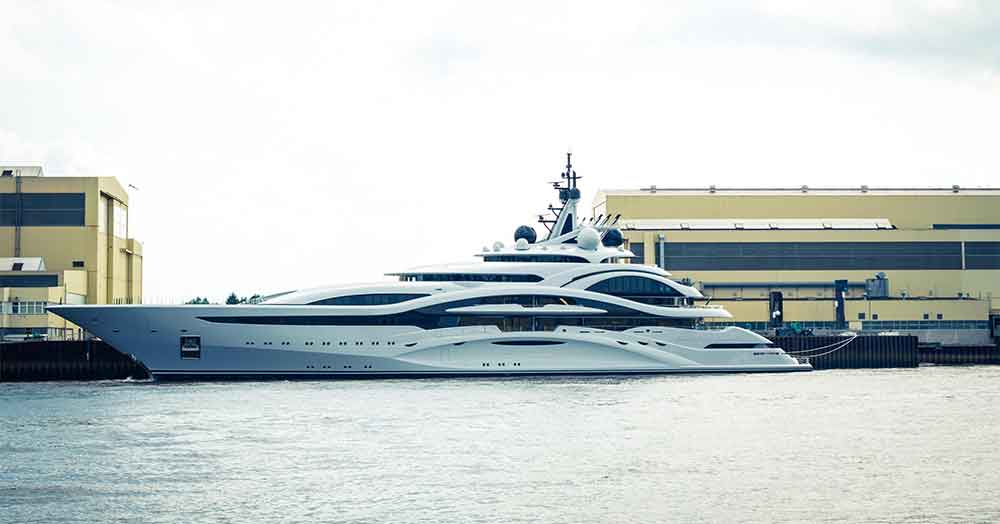
Image by Oliver Schindelhauer from Pixabay
At the opposite end of the spectrum are billionaires. They aren’t looking at the same boats the hundred millionaires are. No. A billionaire (and let’s start at the more modest end of the billionaire category) is going to be looking at a 40- to 50-metre boat that will cost somewhere north of USD 20 million.
Now a billionaire can outright buy a boat for USD 20 million and still have USD 980 million to scrape by on. But rich people hate digging into their assets, regardless of how wealthy they are. So they too will look at some form of finance deal. But instead of the yacht itself being the collateral, maybe they’ll finance the purchase by taking out a loan against some of their other assets.
The same goes for the mega-wealthy hundred billionaires, the richest people on Earth. These people could buy the world’s most expensive yachts along with their weekly grocery shopping and not bat an eyelid. The thing is, like other rich people, most of their wealth is tied up in their assets. So to release money they take out a loan secured against the assets and live off that. If you have billions of dollars in assets, you can get a pretty big sum of money, against a very good interest rate. On top of which, a loan isn’t income and therefore doesn’t attract income tax. (That’s why the yacht owner pays less income tax than you do.)
They’ll do exactly the same to release money with which to buy a yacht. Or maybe there is an even better alternative for UHNWIs. An event like Superyacht Investor London is where their representatives can find out about the latest finance structures, and work out the most tax-efficient way of buying a superyacht for their clients.
That’s nice for them, but what does it have to do with me?
First of all, the more finance vehicles there are to pay for superyachts, the more accessible superyachts become to wealthy people. They all want one. It’s a massive status symbol, just like a private jet is. But the cost can be a barrier to buying a superyacht outright, even for quite wealthy people.
So if more of them can finance a superyacht, the more yachts there will be. That’s good for yacht crew employment opportunities.
One of the big discussion points at last year’s Superyacht Investor London was how were the people faring who were at the lower end of the rich list? 2025 started off brilliantly for them, especially in the USA. Trump came in as President and the outlook for very rich Americans was excellent.
Then Trump started beating up the domestic and global economy. Those Americans who are merely very wealthy, around the hundred-millionaire mark, became far more cautious in their superyacht buying.
The feeling at the time was that purchases at the lower end of the market would shrink in line with the caution. So one thing to watch out for is whether there was any improvement in buying sentiment as 2025 progressed. And what finance deals work for this segment of the rich.
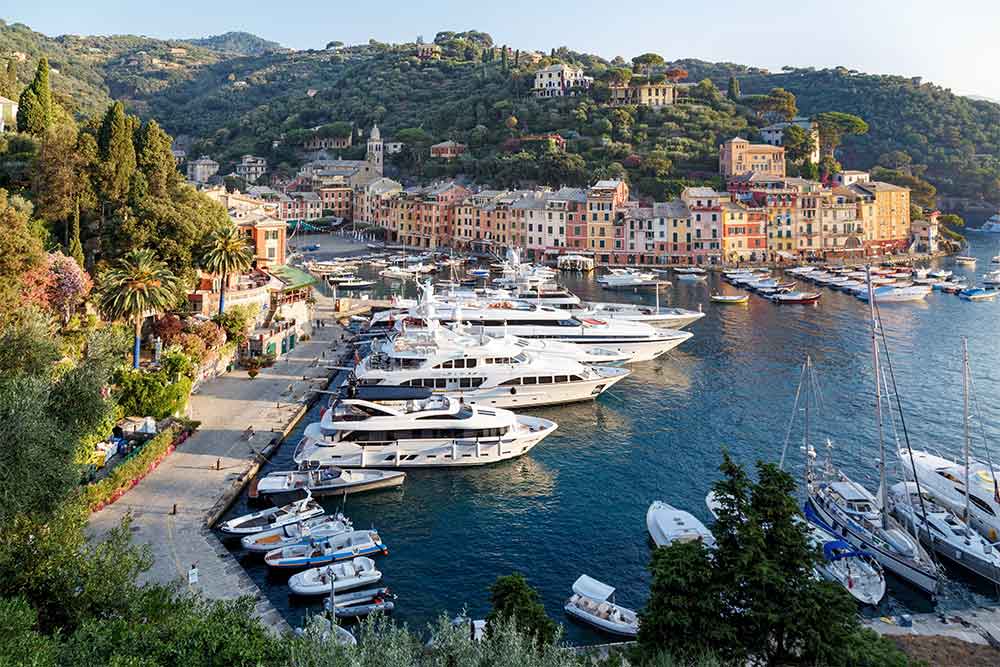
Just like yachts, yacht buyers’ bank accounts come in all sizes and need financing options to match
Image by Domenico Farone from Pixabay
Big money never shrinks
Those UHNWIs who could already afford a superyacht worth over USD 20 million before Trump took office will always be able to afford a USD 20 million-plus boat. That’s the sentiment in finance circles, anyway. At a certain point, you have so much money it’s impossible to drop below a certain level of wealth. Once mega-rich, always mega-rich.
What can we learn from the finance habits of this group that is important for superyacht crew?
In many ways, this is the leading edge of the superyacht industry. It’s where we can see trends emerging that will define the business in the years ahead. Whatever is introduced at the high end of any product range, eventually trickles down to the whole product range. That’s true for any product, not just superyachts.
For instance, would you be shocked to know that people are seriously looking at small nuclear power plants as alternatives to traditional combustion engines on board superyachts? Bet that made you sit up.
If nuclear power plants are introduced, it doesn’t take a nuclear scientist to figure out that the chief engineer’s job just go a whole lot more interesting. Also, how will this impact general certification and training on board? Will it require increased skills and therefore higher pay?
Before such a yacht is built, or even ordered, someone’s going to have to figure out the financing. That’s why a finance event is a bit like a canary down a coal mine. As soon as nuclear becomes a serious option, the money people will be among the first to look at it. So keeping an eye on what they’re talking about is a shrewd move for any superyacht crew looking at a 10- to 20-year career. You need to be ready for the big industry shifts.
Who exactly is looking for finance? (The buyer persona)
All successful businesses use buyer personas: a fictitious ideal customer, described down to the smallest detail.
You can dissect superyacht finance the same way. Who is ordering and what are they looking for? That will tell you where future opportunities for crew lie.
For a start, where are the buyers from? US buyers will have different preferences from Middle Eastern or Asian buyers. They will prefer certain cruising destinations over others.
US buyers might stick closer to home, for example. Arabian buyers might want their yachts closer to home as well, at least part of the time. And where will the growing class of Asian UHNWIs want to station their yachts for most of the year? The Med has universal and lasting appeal, but there’s no guarantee it will be the main base for superyachts owned by Asia’s wealthiest.
Then there are the finance deals for explorer yachts. Voyaging to the remotest and farthest-flung parts of the world is a completely different maritime experience from tootling about the Med or the Caribbean. Exploration cruising requires crew of the highest calibre. That’s an opportunity for crew with ambition. So keeping an eye on finance deals for explorer yachts will give you an idea of how this sector will develop in the coming years.
But even if the finance deals are dominated by ordinary super- and megayachts designed to live in the Med and the Caribbean for most of their lives, keeping an eye on who the buyers are will tell you a lot about which skills are going to be important for crew.
Take a chef, for example. If the superyacht finance market says the number of Asian or Arabian owners is increasing, there is going to be a corresponding change in eating requests on many boats. That’s an opportunity to upskill to meet new dietary requests.
So is learning a relevant language.
Or spending time learning cultural norms, because the days are long gone when the culture on board superyachts is exclusively Western. Sure, below decks it might be dominated by Westerners, but in the owner and guest areas?
Who is your buying persona? Yes, you, the superyacht crew: who is it that is going to buy your services in future? And what are you doing to make sure you appeal to them? And where are you finding out the relevant information?
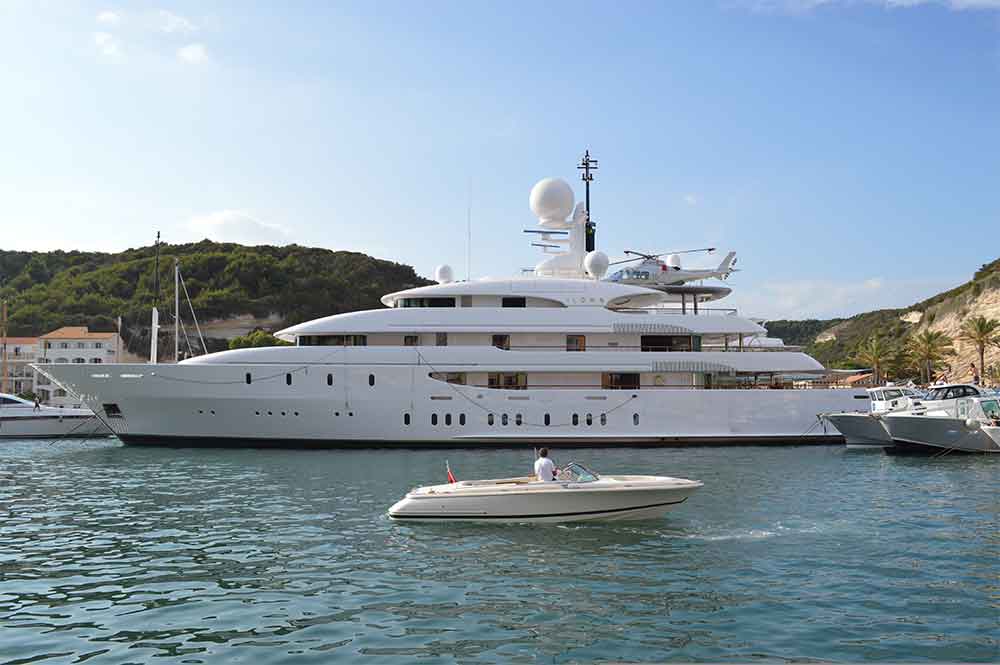
Who buys the yacht determines how it will be used and where crew will be working
Image by Jana Martínez from Pixabay
Newbuild vs secondhand: what’s my opportunity, what’s my risk?
Not all of the finance deals struck are for newbuilds. The secondhand market for superyachts is vibrant, and those purchases need financing as well.
In fact, the value of a secondhand yacht may actually be higher now than it was when it first set to sea, brand spanking new. How is that possible?
Well, if a superyacht entered into service in 2021, it did so in a relatively calm world. Since then, major wars have started in Europe and the Middle East, Trump’s tariffs have caused economic and diplomatic chaos, and the world order has been upended by nationalist leaders who want to create a world of opposed geopolitical blocs rather than global international cooperation.
As a result, material costs have shot up and along with them the price of superyacht newbuilds. So a yacht that cost USD 50 million to build in 2021 might cost upwards of USD 55 million to build today. So a potential buyer might dip into the secondhand market instead of ordering a brand-new boat.
The seller of that 2021 yacht might benefit too. They might be able to ask more for the yacht than they paid for it.
Again, the financiers are going to see the early signs of behaviour in the secondhand market.
Why is this relevant for you?
A vibrant secondhand market increases the chances of the yacht you are on right now changing hands. What happens to you if it is sold to new owners? There is no guarantee they will keep you on. And, as we’ve already explained, they may have a completely different cultural background to the previous owners. How will you prepare for that?
A booming secondhand market might mean you are changing boats more often than you’d like, or that your career is interrupted more often. You need to plan for that.
Trends determine your plans
So, yes, what happens at Superyacht Investors London does have a bearing on superyacht crew. Being able to understand trends in advance will help you plan better.
For a start, you have to think about your career. If you want a 10- or 20-year-long career in yachting, you can’t sit still. You need to keep on top of trends and keep your skillset up to date. Otherwise, you’ll stagnate in the industry (at best) or be jettisoned (at worst).
That would be awful if you’ve built a life plan around staying in yachting for a while. Mainly because if you have a life plan, you’ll have an accompanying financial plan. And that financial plan is vulnerable if you drop out of yachting. So doing everything you can to make yourself appealing to yacht owners is vital. Yacht crew financial planning depends on your success in yachting. That in turn depends on how relevant your skills are. And that depends on how well you’ve kept up with what future owners might want from you.
That’s why keeping on top of the news coming out of industry events is so important.