
Crew Career Moves before the Med Season: Your Financial Prep Guide
The Mediterranean yachting season is just around the corner. Now is the time to get serious about your preparation. Whether you’re a seasoned yachtie rejoining your regular boat, an experienced crew member looking for a new position or a newbie hoping to break into yachting, take a moment to make sure you have everything lined up for a care-free and rewarding six months.
What is the Med season and where is it?
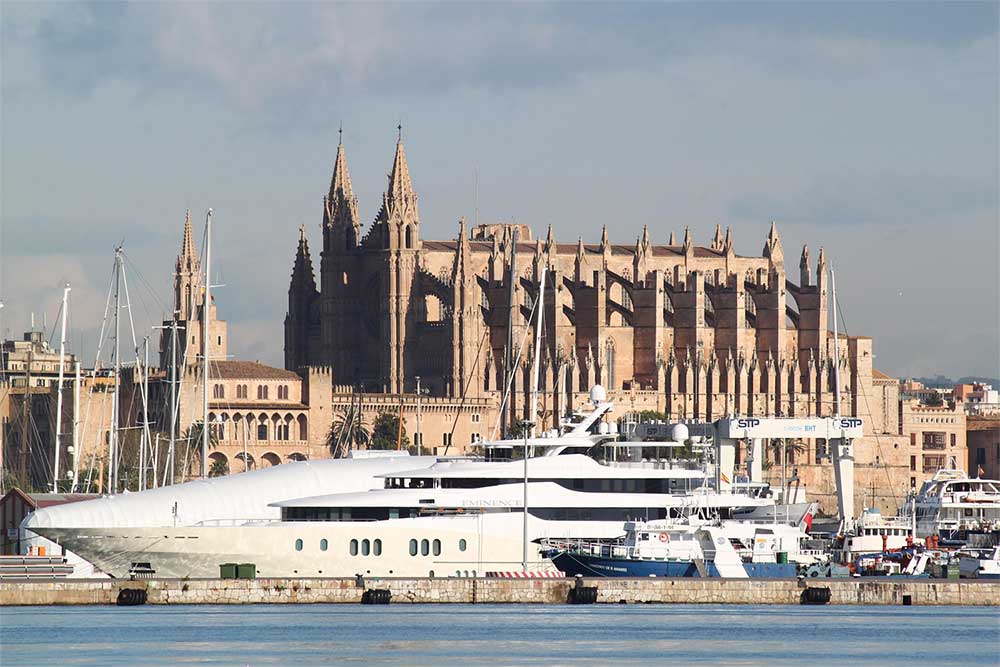
Palma de Mallorca is one of the key Mediterranean superyacht hubs
Image by Anja from Pixabay
You might think that’s an odd question, but bear with us. Not all of the Mediterranean is equal when it comes to yachting.
The Med season itself runs from late April to September, maybe early October.
However, if you don’t already have a position on board a superyacht and you’re looking for work, you need to get there by early April and be making contacts with local crewing agencies, management companies and other superyacht crew.
Location is key. While superyachts might go anywhere in the Mediterranean, the superyacht industry itself is concentrated in a few key home ports. That’s where you need to go.
Specifically:
- Antibes and Cannes in the south of France
- Palma on Mallorca
- Barcelona
- San Remo in Italy
If you base yourself on the south coast of France, you can easily reach yachting ports from Cannes to San Remo in Italy, giving you maximum effective reach from a single location.
If you need guidance about finding your first job on board a superyacht, we have a detailed article and podcast episode there: Find a Superyacht Job.
In this article, we’ll limit ourselves to looking at one aspect of job hunting (the money you’ll need to find a job), along with broader preparation for the Med season that applies to all yacht crew.
Yacht crew budgeting: funding your job search
A key thing to remember is that looking for work on board a superyacht costs money. You need to have the financial resources to cover your expenses for at least a month while you’re looking. Double or even triple that if possible.
And don’t forget to build in an amount to pay for your travel home if your quest for work is unsuccessful.
Also keep in mind that if you’re drawing from a bank account in your home country, currency exchange rates fluctuate. If you’re lucky, the rate will go in your favour and you’ll be able to buy more euros with your money. But shifts can also go the other way, meaning your budget could shrink if your home currency loses value against the euro.
Finding work in yachting isn’t easy. So the longer you can afford to stick at it, the more chance of success you’ll have.
You might get lucky and land a job during your first week in the Med. But don’t count on it.
Even if you do get work early on in your search, you may only end up with day work, especially if you are completely new to yachting. You may even find that your entire first season is characterised by intermittent single days of work, or clusters of a couple of days’ work spread out over several months.
The good news? Yachting rewards those with fortitude and stamina. The longer you can spend spreading your CV around the Mediterranean and building contacts within the business, the better your chances are of ultimately finding work.
Banking for superyacht crew
Speaking of spending money, have you got your banking in order ahead of the new season?
Regular high street banking options aren’t normally well suited to the yachtie lifestyle. They’re simply not flexible enough and are built to service people who work and live their life ashore, and mostly in one location. That’s the polar opposite of crew on board a superyacht.
If you’re new to yachting, you can rely on an international online-only banking service like Revolut.
However, tread carefully. While Revolut and similar services have been hugely popular, you don’t have to look hard to find stories of customer service nightmares when things go wrong.
These companies, while regulated, exist mostly in the ether and solving problems can be a headache. You don’t need that when you’re rushed off your feet 14 hours a day serving the needs of the guests on board.
Once you’ve established yourself in the yachting industry, with medium-to-long-term plans to build a career, you’re better off with a dedicated seafarer’s account, like the one provided by Standard Bank International. This has been specifically tailored for crew on board boats and you can speak to a human being.
You don’t have to give up your Revolut account. They’re convenient for everyday spending. And currency exchange. But you want something more robust for receiving salary payments and making investments.
Get your paperwork in order
In an increasingly fractured world, having your paperwork is vital if you want to work outside your home country.
Many of the Mediterranean superyacht home ports and destinations are within the EU. While you don’t necessarily need EU citizenship to work on board a superyacht, it’s a useful thing to have. That’s especially true if you are in a Spanish, French or Italian port looking for work on board a yacht.
But most yachties won’t qualify for EU citizenship, so having your travel and work visas sorted out when you are in EU home ports looking for work is advisable.
In addition, make sure your passport is valid for the entire length of the Med season, plus at least six months beyond it to be on the safe side.
In addition to visas, you should also make sure your certifications are up to date ahead of the Med season. Are your ENG1 and STCW certs up to date? If you’re a dive master, do you have recognised certification with you?
Yacht crew insurance

Don’t rely blindly on the medical cover the yacht offers
Image by Lidija Jakovljevic on Unsplash
Regardless of whether you’re new to yachting or an experienced yachtie rotating into the Med from the Caribbean winter season, it’s a good idea to check your insurance coverage. That’s especially true of your medical cover.
For a start, do you even have adequate healthcare insurance? Don’t blindly rely on what the boat offers. Superyacht owners are ultra-rich, but that doesn’t mean they are going to spend their wealth on you.
Check to make sure the cover provided by the boat suits your needs year-round, regardless of whether you are on the boat itself or on leave.
Also, what activities are you covered for? If you break a leg skiing or boulder climbing, is treatment for that included in your medical cover? So called ‘extreme’ activities are often excluded from policies as are injuries incurred off the boat. So if you hurt yourself doing them, it’s on your dime, not the insurance provider’s.
Make sure as well that you understand what other limitations there are on the treatment options available under the policy.
The same goes for how much you will be expected to contribute towards your care. Look out for excess levels (the amount you will have to cover yourself before the insurance starts paying out) and shortfalls (the amount of the treatment cost the insurer doesn’t cover—again, you’ll have to make up the difference).
These are all important things to understand so you can make sure what the boat provides is suitable for you and your lifestyle. If it isn’t, getting your own health cover is.vital.
Income protection for superyacht crew
Income protection insurance provides you with an income if you’re temporarily unable to work. It’s often overlooked or dismissed. However, if you’re an experienced crew member who has built a relatively comfortable lifestyle off the back of a solid career in yachting, you might want to protect that lifestyle in the event you are unable to work for a while.
Think illness or injury. If you’re not working, will the bills at home get paid?
On top of this, you may be starting the Med season with a bump in pay. Maybe you earned a promotion and pay rise, or moved to another boat on a higher salary. Does your existing income protection cover that increase in pay?
If you don’t keep your income protection up to date, you run the risk of finding yourself dropping down to your previous level of income should you be unable to work for due to injury and illness.
Set yourself up for success, financially and professionally
The superyacht industry is fast-paced and relentless. Once you’re on board the yacht, you get very little time to think of anything other than the needs of the guests. In fact, you get no time at all.
Whatever you didn’t do before the season started is going to have to wait until it is over.
That includes any financial plans you may have. The fact is that the sooner you get your financial plans in place, the more you will benefit from them. Investments grow over time.
The longer you give them, the better they will do. Losing the best part of a year is the same as losing money.
Do you need to build a financial plan? Yachting Financial Solutions can help you with this. link
The good news? Once you have your plans in place, automation kicks in. Your financial plan is working away in the background while you work your tail off on board the boat in the Med. When the season is done, you’ll have done six month’s work — and so will your financial plan. And it’ll keep doing so next year, the year after, and so on for as long as you want it to.
If your career in yachting is on a stable footing, take the time before this year’s Mediterranean season to get a financial plan in place so you get the most financial reward from your hard work this year and in the years ahead.
Pre-Med Prep Checklist
Big enough budget to sustain you while you search for work and pay for your return home, if necessary
CV up to date
All certs (STCW, ENG1, other relevant tickets and qualifications) up to date
Work and travel visas current
Passport valid for the length of the Med season + at least 6 months
A dedicated mariner’s bank account
Sufficient medical cover in place
Sufficient income protection in place (take your promotion and/or pay rise into account)
Financial plan in place to benefit the most from your career in yachting