
What Is Life Planning?
Life planning and financial planning often get confused. People think they are the same thing. They aren’t. They are connected, but they are two very different things. So let’s look at what they are and how they are related to one another.
Life planning is like a well-run yacht

To understand life planning, imagine two boats out on the ocean. One is drifting along wherever the currents and winds take them. The other is setting its own course, under its own power.
It’s clear the second boat is in control of its situation. It knows where it wants to go, how it’s going to get there and it has the propulsion to succeed. It has a plan and it has the means to carry out the plan.
You might think that the first boat doesn’t have a plan. After all, it’s just bobbing about aimlessly, at the whim of the winds and currents. But you’d be wrong. The crew of that boat do have a plan. They have made a choice. Their choice is to do nothing and place their fate in the hands of the elements. In other words, their plan is to do nothing.
So both boats have a plan.
Boat One: coast along, let outside factors determine their journey, see where they end up and in what condition.
Boat Two: act purposefully, take control of their journey, know their destination, arrive safe and sound, arrive on time.
Which boat would you like to be on?
Boat Two has a life plan
Any mariner worth their salt is going to choose Boat Two. Who in their right mind is going to set off across the ocean on a whim and a prayer?
You can look at your journey across the ocean of life in the same way.
You can choose the same approach as Boat One and drift through life, mostly being steered by the demands and dreams of others.
Or you can choose to look at life like an ocean voyage and make a plan.
It’s important to know, though, that your plan isn’t carved in stone. Just like the course of a voyage, your life plan can change to adapt to new circumstances.
Your life plan should be flexible. In fact, it should be so flexible that you can even decide to head to a different destination altogether. The key thing to remember is that you are the one choosing what changes to make and when. You are in control.
The trap

Life planning is one of those phrases that is easily misunderstood. Many people think it’s about having every single step of your life, pretty much every hour of every day, mapped out. It isn’t.
A life plan is meant to be a guiding light. It’s there to keep you on course and heading in a direction that you have chosen. Its purpose is to give you as much control over your life as possible.
For most people, life looks like this:
- Go to school
- Get a job
- Switch jobs a few times
- Retire
- Die
Very little actual planning happens.
Yes, they get some say about their career. They choose which jobs to apply for and which job offers to accept. But their working days are determined by the demands of their employers. That includes where they live and work. And what days and which hours they work. And what they do during those hours.
Worse still, once employed, lots of people switch off. They settle into a routine, all the way to retirement, which comes around a lot faster than they ever thought.
Suddenly, their working life is over, they’re tossed out, and they’re thinking, “What the hell happened?” All those dreams they had when they were younger haven’t been realised. They’ve spent 40 years making the dreams of others come true, carrying out the plans of others.
OK, that’s the work side of things. But is that so bad? We’ve all got to work. We all need money. Handing over a bit of choice is just part of the bargain.
Outside of work, people have full control.
Do they, though?
Making small choices in life isn’t the same as a life plan
Most people settle into a routine outside of work as well. That routine is often based on consumption.
The vast majority of us are consumers. Which is what the world wants. After all, if we weren’t all consumers, the companies that employ us wouldn’t have anyone to sell their products and services to, and we’d all be out of a job.
People mostly consume the same things: food, drink, holidays and whatever the entertainment industry has to offer.
Yes, they get to choose what they eat and which Netflix series to watch, but these choices are not the same as the choices you get to make as part of a life plan. Unless your life plan is Work – Eat – Watch Netflix – Repeat until Death.
Even then, it’s not really a life plan. It’s just letting yourself fall into a pattern of consumption.
What sets a life plan apart is that it is based on creation rather than consumption.
Creating something is proactive. Consuming something is reactive, because in order for you to consume something, it has to be created first, usually by someone else.
Creating something adds.
Consuming something subtracts.
Creation requires a plan to bring about something new.
Consumption requires much less planning. Sometimes hardly any at all. It’s handed to you on a plate, sometimes literally.
Life planning is about creating your life, rather than having it created for you

Life planning gives your life clear direction, one you are in control of.
That might sound grand; as if you have to set out every single moment of your life in advance. But that’s not what it’s about at all.
Life planning is about you getting things out of life that you truly want.
And your plan can be made up of lots of much smaller plans.
The point is that you are choosing your goals and actively working towards them.
You are creating your life, rather than consuming the one provided by others.
Just like the second boat in our example at the start of this post, you have decided where you want to go and how you are going to get there.
You’ve gone from bobbing about on the waves to riding them with intention to reach your destination.
Life planning sounds big, but it really isn’t
You might think, “That still sounds too big.”
The thing is, the plan itself isn’t big, but the outcome is. That’s where you need to place the emphasis.
On top of which, your plan shouldn’t be big. Remember what we said about flexibility? A big, detailed, unwieldy plan isn’t flexible. And a plan that isn’t flexible isn’t a proper plan.
Take Boat Two, for example. Its plan is remarkably simple. The crew will plot a course to get the yacht to where it needs to go. The course they choose will have milestones and progress checks built in. But rather than dictating how every metre of ocean needs to be covered exactly, the course (plan) will focus on where the boat needs to be by the end of each day, with some tolerances built in. How it gets there isn’t so important. Just as long as it keeps going in the right direction and stays on course, reaching its final destination.
That means if the weather turns, the crew can adapt effectively. They still know where they need to go, so they can make effective course adjustments to accommodate the changing conditions and still arrive at the intended destination.
An example: the scuba school
Let’s say you want to set up a scuba diving school after you leave yachting. That’s a small life plan. It could be part of a bigger, overarching life plan: set up a global franchise network of diving schools, build the business, sell the business, retire. Life plans can be scaled up and down.
Back to the first scuba diving school, though.
You’ll need to identify a suitable location, establish a legal business entity, obtain relevant business permits, earn your scuba diving instructor licences and build up the money to get the business off the ground. There are other things, including somewhere to live (onsite perhaps?), but let’s limit ourselves to the business itself.
While you are still in yachting, you can draw up a plan that outlines the steps you need to take. And you can work to cross off each step along the way.
Because you know what needs to be done, you can organise your free time in such a way that you are moving closer to achieving your scuba diving school.
Plan = Guidance
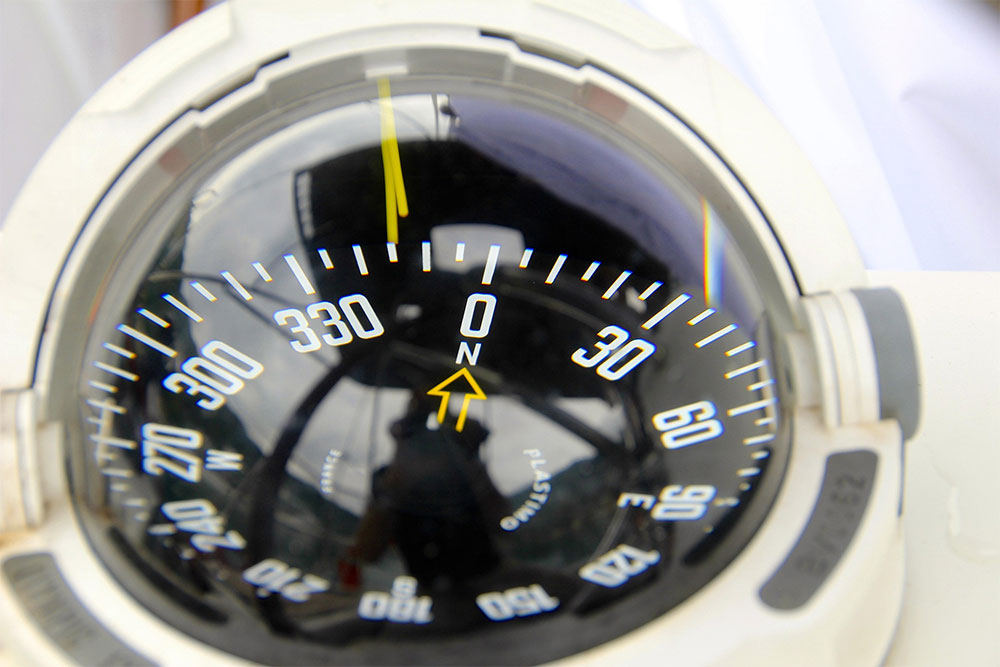
Just like when you plot a course for the boat, your life plan, or the sub-plan that involves setting up the school, gives you clear guidance.
You know which milestones along the way you need to reach.
You know which direction you are moving in.
And you have a timeframe for reaching each point on the journey.
You can structure every aspect of your life in such a way that it is aligned with your goal.
More importantly, when unexpected things happen, you can make effective adjustments to keep you on course. Just like Boat Two does in the face of rough weather.
Better still, even seeming disasters won’t be able to stop you. You might lose your job on the yacht. Not a problem. The job is a means to an end, not the end itself. You can find another job, either in yachting or ashore. As long as you keep building towards your goal, it doesn’t really matter what happens.
That’s the flexibility we mentioned earlier. The plan adapts to the circumstances you find yourself in. The route might change, but the destination stays the same.
The fuel that powers the boat
You may already have spotted something we said at the very beginning about Boat Two, the one that’s in control of its destiny.
“It knows where it wants to go, how it’s going to get there and it has the propulsion to succeed. It has a plan and it has the means to carry out the plan.”
It’s not just a case of having a plan. Boat Two knows its destination and its course, but both are useless without fuel.
The same goes for your life plan.
You might know what you want to achieve. (Destination)
You might know what you need to do to make it happen. (Course)
But without your equivalent of fuel, your life plan will remain a dream.
In your case, fuel is money. You need money to pay for your life plan. Money is what will drive your plan to completion.
Your financial plan is in service of your life plan
Seen this way, it’s clear that your life plan and your financial plan go hand in hand. A life plan is the boat that will carry you to your destination. A financial plan is the boat’s fuel.
Your life plan comes first. Without it, a financial plan lacks purpose. It has no end goal (how much money you need), nor a timeframe (when you need it by).
A financial plan is a structured approach to building up the money you’ll need to make your life plan a reality.
So not only does your life plan guide your activities (ie. do the things that move your plan forward), it also guides your financial decisions. The biggest of which is the decision to save and invest money towards your financial plan in the first place, rather than spending it all.
Suddenly, you know why you are saving money. Your money has a purpose.
More powerful still: you are using your money to create something, not just consume things.
You are building towards something with your money.
You are building towards achieving your dreams.
A life plan aligns your daily life and your financial life in such a way that, if you stick to the plan, you will achieve your dreams.
Your life plan is also a powerful motivator to help you stick with your financial plan when you run into life’s headwinds. Because if you know what your financial plan is going to help you achieve, you’ll keep going rather than abandoning it.
For us, life planning and financial planning are two sides of the same coin. You can’t have one without the other. That’s why we always make sure your financial plan is in service of your life plan.
If you’d like to get started today, we’re here for you: