

2026 Shipyard Order Books: What They Mean for Crew Jobs and Salaries
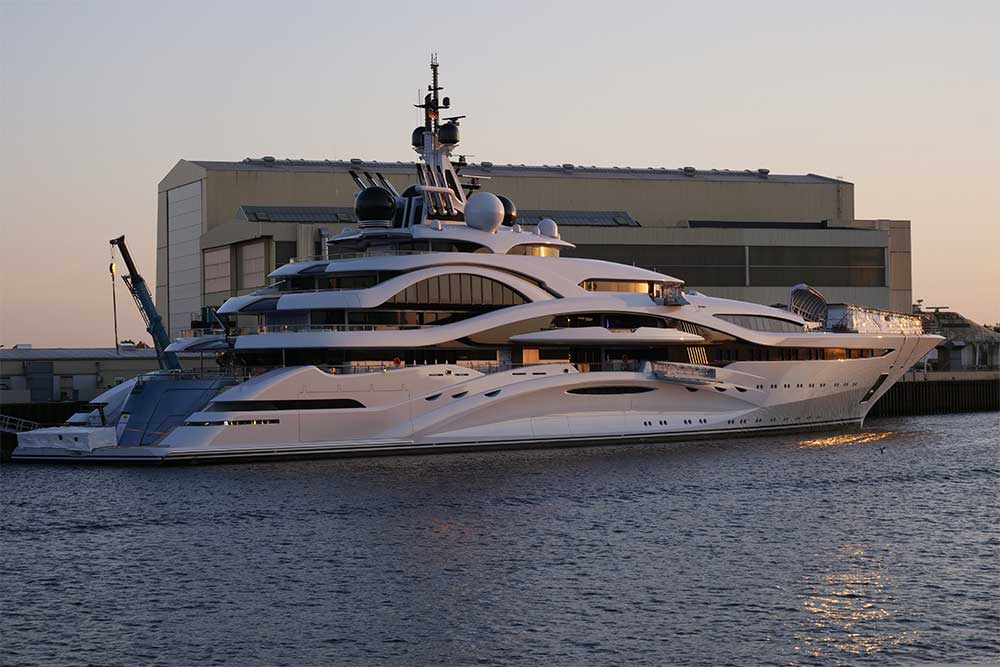
Orders for megayachts are looking healthy
Image by wasi1370 from Pixabay
There are close to 1,100 superyachts of all types and sizes on order at yards around the world. That’s not the same as actively under construction. But it does give you an idea of what could potentially enter the market in the next couple of years. That, in turn, will have an impact on both yacht crew employment trends and yacht crew salaries. Smart superyacht crew pay attention to this sort of thing, so they can make robust life and financial plans.
What the order book can and cannot tell you
We recently wrote about how developments in yacht financing can foreshadow changes in the industry. If finance is the medium-range radar setting for potential trends in superyacht building, then a look at the order book is the short-range radar readout. But it’s not a completely accurate one.
One of the reasons the order book isn’t 100 per cent reliable is that it contains projects that are stalled, some indefinitely. Also, while the order book will tell you a lot about the size, length, intended purpose and propulsion system of what’s been ordered, it won’t tell you everything about fit out and interior designs. In fact, for purpose-built one-offs, you might not learn much at all about the interiors.
With those caveats out of the way, let’s look at what the current order book tells us.
How the order book is trending
Depending on your source, there are just under or just over 6,000 superyachts in service at the moment. 1,100 new yachts coming on stream won’t boost that to over 7,000. Some yachts will be retired and scrapped or repurposed. A steel-hulled yacht can last for 75 years, but realistically, it’s going to be phased out of the active fleet a lot sooner.
Nevertheless, new yachts are being added to the global fleet more quickly than they are leaving.
When you break down the order book into size segments, you’ll see that orders for yachts below 40 metres have been slipping in recent years. More are coming, but this newbuild segment has lost some of its vim. People who buy in this category have been a little more wary of committing to big purchases. The main reason is the economic headwinds caused by geopolitical tensions and the chaos caused by Trump’s tariffs.
Looking at bigger yachts, the picture is rosier. Orders for mid-sized yachts (40 to 75 metres) have been stable or increased slightly over the past year. And there has been notable growth in orders for yachts over 75 metres. The feeling about these two segments is that if you have the financial muscle to afford a 40-metre-plus yacht, your wealth stockpile is big enough and robust enough to always be able to afford one, regardless of what is going on in the world.
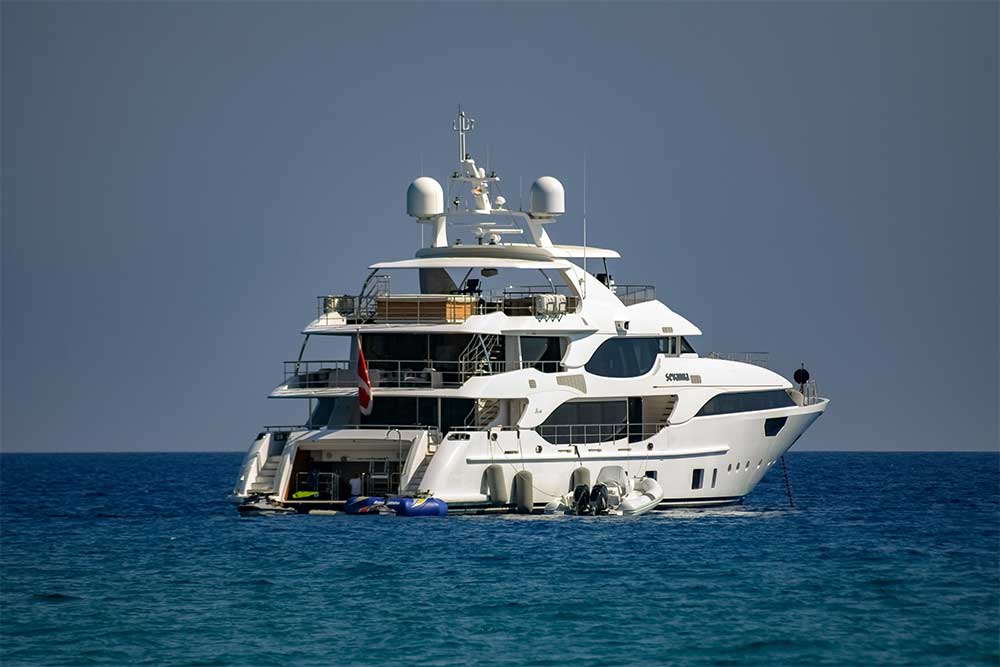
Orders for midsized yachts are holding up
Image by Dimitris Vetsikas from Pixabay
The order book and employment
With growth concentrated on yachts above 40 metres, more boats in need of bigger crews will join the existing fleet.
For yacht crew, this is an opportunity to either find a position or promotion on a bigger, more prestigious boat, or unlock a promotion on board their current boat as crew above them progress to bigger yachts. Regardless, they should stand to benefit from a pay rise.
In addition, an overall increase in the number of superyachts means more employment stability for existing crew, if not on board their current yacht then on board another.
Whether it also improves the prospects of those trying to get into the industry is harder to predict. On the one hand, the industry may need more crew. But if the smaller superyacht segment of the market contracts over time as fewer new boats are added and older boats cycle out of the fleet, crew currently serving on smaller yachts will potentially migrate to bigger yachts.
How many vacant positions that leaves on board a potentially declining number of smaller yachts remains to be seen. However, it’s not like this segment is going to cease to exist either. Nor is it certain the dip in newbuild orders for smaller superyachts will continue indefinitely.
Taken as a whole, you have to think that the total demand for crew in the industry as a whole will increase. That can only be a good thing for existing crew and those looking to find a way into the business.
Experience matters, and will only become more important
Growth in the order book is strongest for megayachts. That’s an important signal for crew.
Bigger superyachts need more experienced crew to run properly. The biggest yachts are the most demanding of all. Managers and crewing agencies that look after these grandiose, leading-edge boats prefer crew who have served on board a bigger yacht before.
Firstly, because bigger yachts mean bigger crews. The change from working with 10 or 20 crew mates to a boat with as many as 80 is a big one. It won’t suit everyone. Crew who know what it’s like to serve on board something more akin to a ship may have an advantage over crew coming from much smaller and more intimate boats.
Secondly, experience counts on board megayachts because sailing and manoeuvring them demands the highest level of skill and expertise.
At the same time, bigger yachts tend to be custom builds, rather than semi-custom series builds. So that means they will be placed in the hands of the most experienced crew, who can draw upon a deep well of knowledge of superyachts, rather than only being familiar with standard or semi-standard designs.
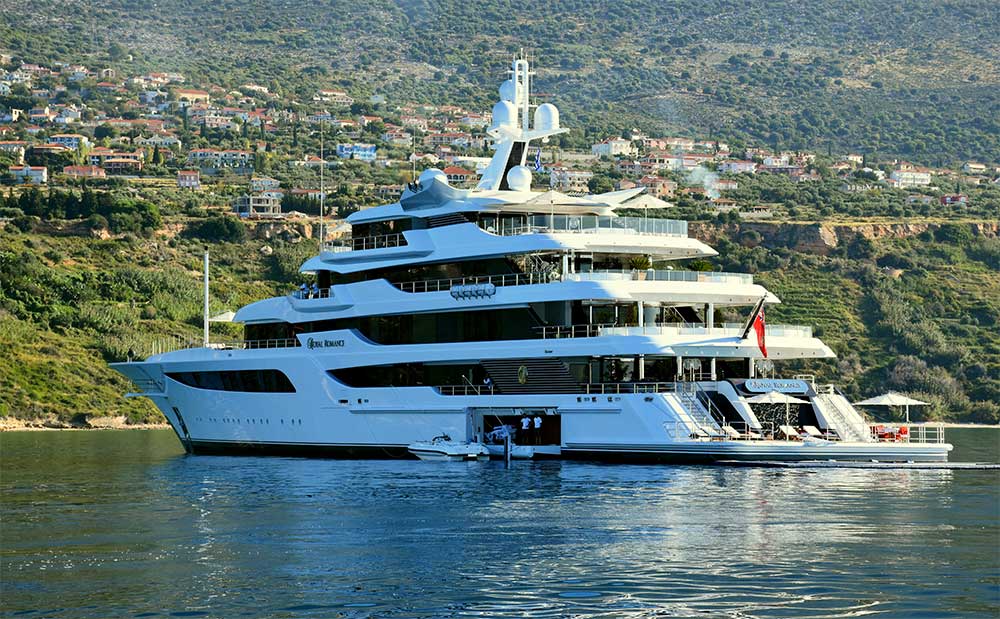
The biggest megayachts are more akin to ships than yachts, and need to be crewed as such
Image by Bernard from Pixabay
Small boat experience is useful too
That said, the vast majority of yachts in service will still be in the small- and mid-range of the size scale. This is where series designs and builds are popular. And the smaller the yacht, the more chance it’s a semi-customisable, off-the-peg design rather than a one-off.
So will experience matter here so much? Yes, but in a different way. And keeping an eye on series orders tells you whether your experience is going to stand you in good stead. Is the boat you’re on from a popular series or a less common one?
Think of it like driving a car. If you’re familiar with the make, you’ll more easily drive off in another model from the same maker than someone who is used to a car made by another manufacturer. Yes, the foot pedals and steering wheel are in the same place. But windscreen wipers, indicators and headlamp switches will all be unfamiliar. As a yacht owner, whom are you going to hand the keys over to?
Experience on a popular series-built boat can increase your chances of work and promotions on board another yacht from the same series.
Size isn’t everything
While bigger yachts are becoming more popular and the mega-rich are pushing the boundaries of size all the time in an eternal game of one-upmanship, that’s not the only significant development to keep an eye on.
A new generation of superyacht owners is coming through, either by building business empires quickly from scratch (think tech entrepreneurs) or because they are taking over the reins of family wealth from their parents. And younger owners want different things from their superyacht experience.
Younger owners may be more inclined to think of the environment. That will accelerate the adoption of cleaner propulsion systems, including hybrid, hydrogen and solar solutions. That’s significant for the engineering crew.
Younger owners are also more interested in experiences and adventures rather than admiring the Mediterranean sunset over a beautiful island or harbour. Hence the increasing share of explorer superyachts in the order books. These are luxury boats designed for active voyaging to remote locations, rather than sedate cruising. That will place bigger demands on crew and attract crew with more maritime experience.
On board, younger owners will also want different things compared with their elders. There is a trend towards wellness and health, which will filter through into the facilities and features that younger buyers will expect to find on board. Again, that’s going to impact the kind of crew they are looking for. Certification in nutrition, massage, yoga, meditation, pilates, etc can all add to your value as a crew member and increase your chances of employment and higher pay.

Wellness has become a major part for the owner and guest experience on board superyachts, creating opportunities for crew willing to add to the skills they can offer
Image by EnergieDeVie from Pixabay
Geographical shifts
As the so-called BRICS countries fulfil their potential, they will produce increasing numbers of people wealthy enough to afford a superyacht. Brazil (the ‘B’), India (the ‘I’) and China (you’ve figured it out by now) especially.
Yachting has always been an international business, but today it’s a multi-international business, both in terms of destinations and yacht owner profiles. That trend will only continue in the years to come.
In turn, that will have an impact on employment and yacht deployment patterns, as well as giving culturally fluid crew an advantage. Superyacht crew who expand their cultural expertise and knowledge (languages, customs, beliefs, etc) will likely attract more and better employment opportunities, along with higher salaries and better financial planning success, than those who don’t.
Order books are healthy, the short- to medium-term outlook is good
Generally speaking, the superyacht order books are in pretty fine fettle. Yes, there has been a year-on-year decline in total superyacht newbuild orders since the sharp jump in orders immediately after the Covid years, when orders ballooned by 30 per cent compared with the years leading up to the pandemic. But even though the trend is downwards, 2026 orders are still up 25 per cent on pre-Covid levels.
That’s good news for the superyacht industry as a whole, let alone for crew.
For crew, the increase in overall superyacht fleet size will mean increased employment opportunities and a boost in yacht crew salaries for those with ambitions to build a career. The order books read like an instruction manual, showing what you need to do to make yourself as employable and valuable as possible to the industry in the years to come.